


When Fire Meets Steel: What Homeowners and Businesses Face
A Safe Locksmith in Toronto, ON is often called after a fire because the problem feels overwhelming: a scorched safe, unknown internal damage, and irreplaceable documents or valuables locked inside. Fire doesn’t just burn surfaces—it introduces extreme heat, toxic smoke, and corrosive moisture that can quietly destroy locking mechanisms and contents long after flames are gone. The anxiety grows when insurance timelines tighten and access to records is urgent. The good news is that fire damage does not automatically mean your safe is lost. With professional assessment, careful remediation, and compliant methods, many safes can be stabilized, repaired, and opened without compromising evidence or safety. This article explains what can realistically be repaired, what cannot, and how a qualified safe locksmith approaches fire-damaged safes in Toronto.
Why Fire Damage to Safes Is More Complex Than It Looks

Safes are designed to resist heat for a rated duration, but real-world fires are chaotic. Temperatures can spike beyond ratings, flames can linger longer than expected, and firefighting efforts introduce water and chemicals that complicate recovery.
Heat Exposure vs. Fire Ratings
Fire ratings are based on controlled testing. A residential fire safe rated for 30 or 60 minutes may protect paper at 350°F, but structure fires can exceed that threshold, especially in enclosed spaces. Prolonged heat can:
- Warp door frames and boltwork
- Degrade lubricants into sticky residues
- Anneal metals, weakening tolerances
- Destroy electronic components and keypads
Smoke, Soot, and Corrosive Residue
Smoke contains acids that etch metal surfaces and infiltrate dial assemblies. Soot mixes with moisture to create sludge that binds moving parts. Even if the exterior looks intact, internal corrosion can progress quickly.
Water and Suppression Damage
Fire suppression often saves structures but harms safes. Water intrusion can rust springs, freeze boltwork, short electronics, and swell fireboard insulation. Delays increase damage.
The First Steps After a Fire: What to Do Before Calling Anyone
Speed and restraint matter. Avoid forcing the door or attempting DIY fixes that can complicate professional recovery.
- Do not open the safe yourself if it’s hot or recently exposed; thermal shock can crack components.
- Document the condition with photos for insurance.
- Stabilize the environment by reducing humidity if possible.
- Call a qualified safe locksmith with experience in post-fire recovery rather than a general handyman.
How a Safe Locksmith Evaluates Fire-Damaged Safes
A methodical assessment determines whether repair, opening, or replacement is appropriate.
Exterior Integrity Check
The locksmith examines deformation, hinge alignment, door gaps, and welds. Minor warping may be corrected; severe structural failure often means replacement after contents are recovered.
Locking System Diagnostics
- Mechanical dials: Heat can expand components and contaminate wheels. Many can be cleaned, re-timed, or rebuilt.
- Electronic locks: Heat and water usually destroy circuit boards. Replacement is common, but opening without drilling may still be possible depending on damage.
- Key locks: Pins and wafers may corrode; precision extraction and replacement are options.
Boltwork and Relockers
Relockers may have triggered due to heat or impact. Skilled manipulation or controlled drilling is used to avoid unnecessary damage.
Repair vs. Recovery: What Can Actually Be Fixed?
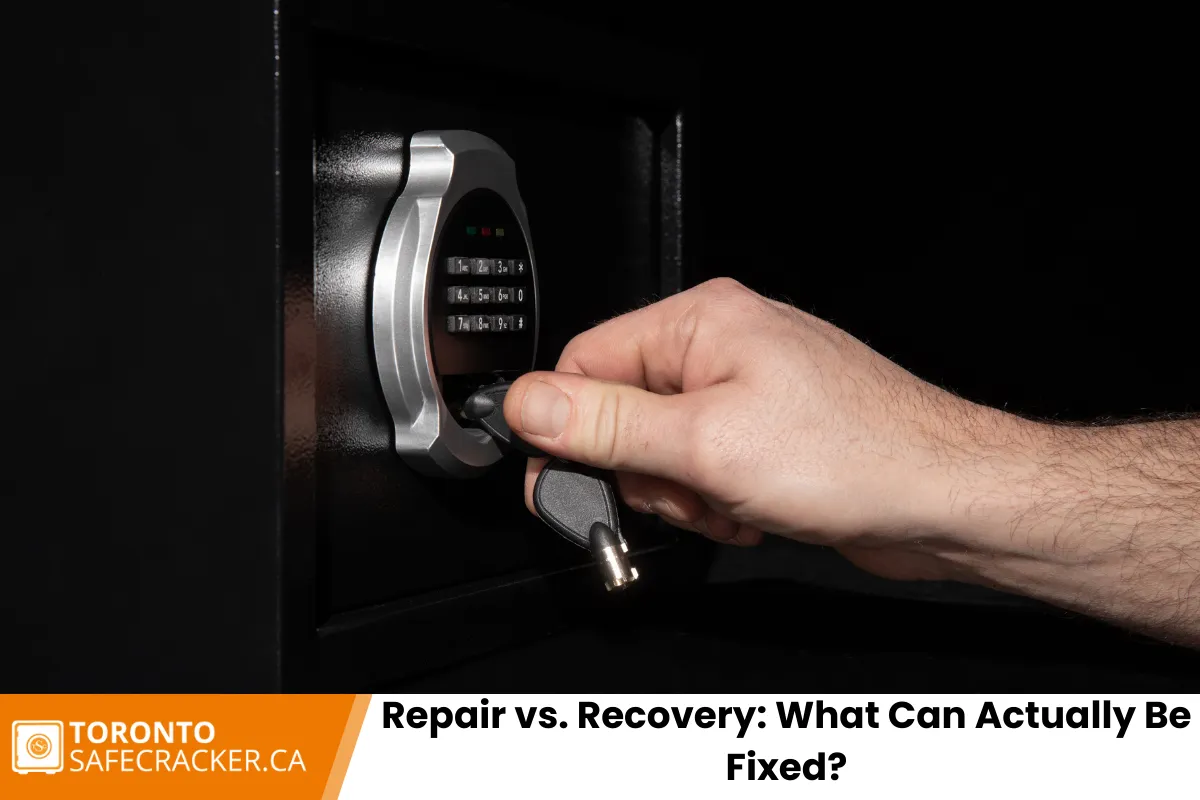
Not every safe should be repaired, but many can be made functional again.
Repairs That Are Often Successful
- Replacing electronic locks and keypads
- Rebuilding mechanical dials
- Cleaning and re-lubricating boltwork
- Correcting minor door warping
- Replacing fire insulation panels
Situations Where Replacement Is Wiser
- Severe shell deformation
- Compromised fire barrier throughout
- Structural cracks that affect security
- Repeated water saturation causing deep corrosion
In these cases, the safe locksmith focuses on non-destructive or minimally destructive opening to recover contents, then advises replacement.
Read Can a Safe Locksmith in Toronto, ON Fix a Safe That’s Been Tampered With?
Opening a Fire-Damaged Safe Without Making Things Worse
Opening methods are chosen to preserve contents and evidence while maintaining safety.
Non-Destructive Techniques
When tolerances allow, manipulation or bypass techniques can open the safe without drilling. This is ideal for protecting integrity and reducing costs.
Precision Drilling and Repair
If drilling is necessary, it is done with precise measurements and repair plans in place. The goal is to open, recover, and restore security if feasible.
Evidence and Compliance Considerations
For businesses and regulated environments, maintaining chain of custody and avoiding contamination is critical. A professional safe locksmith follows procedures aligned with local regulations and insurance requirements in Toronto, Ontario.
Protecting What’s Inside: Document and Media Recovery
Contents often need immediate attention.
- Paper records: Heat and moisture cause ink bleed and brittleness. Controlled drying and freezing techniques may help.
- Digital media: Hard drives and USBs can sometimes be recovered by specialists if addressed quickly.
- Valuables: Metals may tarnish but are often salvageable with proper cleaning.
A safe locksmith coordinates opening to minimize further exposure and recommends next steps for content restoration.
Commercial vs. Residential Safes: Different Challenges

Residential Units
Smaller fire safes are more vulnerable to prolonged heat. Repairs focus on lock replacement and content recovery.
Commercial and High-Security Safes
Larger safes with thicker steel and advanced relockers often survive better structurally. Repairs may be more involved but are frequently worthwhile.
Timing Matters: Why Delays Increase Damage
Corrosion accelerates within days. Electronic components degrade rapidly. Calling a safe locksmith promptly improves outcomes and lowers costs.
Costs, Insurance, and Documentation
Costs vary based on damage severity, lock type, and opening method. Insurers often require:
- Professional assessment reports
- Photos and serial numbers
- Documentation of opening methods
A reputable safe locksmith provides clear records to support claims.
Choosing the Right Professional in Toronto
Look for experience with fire-damaged safes, proper tools, and knowledge of Ontario regulations affecting locksmith work. Avoid providers who suggest immediate destruction without assessment.
What Toronto Regulations Mean for Safe Locksmith Work
Locksmiths in Toronto operate within provincial and municipal frameworks emphasizing safety, property protection, and lawful access. A compliant safe locksmith ensures authorization is verified, work is documented, and methods align with accepted industry practices.
Is Full Restoration Worth It?
The decision balances security, cost, and future reliability. After assessment, a safe locksmith explains risks and options so you can choose confidently.
Final Takeaway for Property Owners After a Fire
Fire damage does not automatically end a safe’s life. With expert evaluation and timely action, many safes can be opened, repaired, or responsibly retired after contents are secured. The right approach protects your property, your records, and your peace of mind.
Safe Locksmith in Toronto, ON - Safe Locksmith - Toronto Safecracker
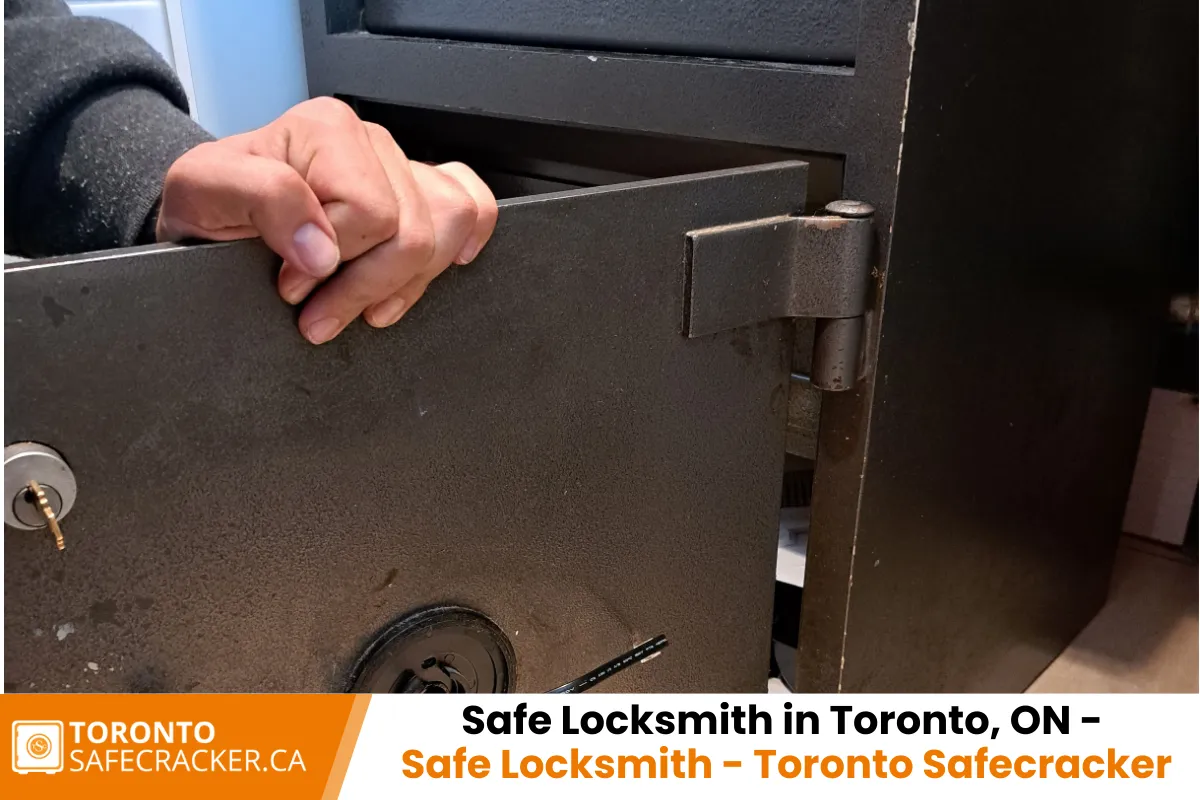
When fire damages a safe, we know time and precision matter. At Safe Locksmith - Toronto Safecracker, we specialize in assessing, opening, and repairing fire-damaged safes across Toronto, Ontario. As a trusted safe locksmith, we use proven methods to protect contents, support insurance documentation, and restore security whenever possible. We handle residential and commercial safes, mechanical and electronic locks, and complex relocker systems. Our team works carefully, lawfully, and transparently—no shortcuts, no unnecessary damage. If your safe has been exposed to heat, smoke, or water, call us at (647) 749-6040 or use our contact form to schedule a professional evaluation. We’re ready to help you recover what matters.
Frequently Asked Questions
Can fire-damaged safes still protect documents after repair?
A repaired safe may function securely, but its original fire rating cannot be guaranteed once insulation or structure has been compromised. A safe locksmith can replace damaged components and restore locking reliability, yet fire resistance depends on the extent of heat exposure. For critical documents, replacement after recovery is often recommended.
How long does it take to open and assess a fire-damaged safe?
Timing varies by damage and lock type. Initial assessment can be completed the same day, while opening may take hours if non-destructive methods work. Precision drilling and repairs can extend the process. Prompt scheduling reduces corrosion-related delays.
Is it safe to move a fire-damaged safe before inspection?
Moving a damaged safe can worsen warping or trigger relockers. If relocation is necessary, secure professional guidance. A safe locksmith can advise on stabilization and safe transport to prevent further damage.
Will opening a fire-damaged safe destroy the lock?
Not necessarily. Many openings preserve or repair the lock, especially with mechanical systems. Electronic locks often require replacement, but the safe itself may remain serviceable depending on overall condition.
Can smoke damage alone prevent a safe from opening?
Yes. Smoke residue can gum up dials and boltwork, making normal operation impossible. Cleaning and rebuilding by a safe locksmith often restores function if heat damage is minimal.
Disclaimer: This article is for general informational purposes only and does not constitute legal or insurance advice. Safe conditions and outcomes vary by incident. Always consult a qualified professional for assessment and service in Toronto, Ontario.
Read Toronto Safe and Vault Locksmith: What Are the Latest Security Features for Safes?